
North Tonawanda City Directory Collections
The most complete published finding aid is the New York State Library city-directory catalog. It files the run under Tonawanda, so a title alone cannot settle whether a listed person or address belongs in North Tonawanda. The catalog lists 1892; 1894 and 1895; 1898; 1900/01; 1905 through 1916; 1919 through 1942; 1946 through 1948; 1951 through 1953; 1955; 1957 through 1977; 1979/80; 1981; 1983; and 1985 through 1986 on fiche. Those are cataloged holdings, not proof that every page in each volume covers the Niagara County city.
| Collection | Years | Where Held | Access |
|---|---|---|---|
| Tonawanda/North Tonawanda catalog run | 1892; 1894-95; 1898; 1900/01; 1905-16; 1919-42; 1946-48; 1951-53; 1955; 1957-77; 1979/80; 1981; 1983; 1985-86 | New York State Library | Cataloged on fiche; verify the volume and coverage |
| North Tonawanda Local History materials | Year range not fully published online | North Tonawanda Public Library | Reference and noncirculating materials; call ahead |
| North Tonawanda directory excerpt | 1893 | Historical Society of the Tonawandas | Metadata and image viewer; inspect the image for an entry |
| Tonawandas directory microfilm preservation lead | 1892-1986, as described in the report | Library and Historical Society holdings | Ask about a filmed reel or reader copy |
Gaps matter. The catalog has no continuous year-by-year run, and the local collection descriptions do not publish a complete shelf list. Record the volume year, page, city section, and exact address before drawing a conclusion. A directory is a dated listing, not a continuous residence record.
North Tonawanda Directory Years and Boundaries
North Tonawanda is in Niagara County. The City and Town of Tonawanda are in Erie County. That distinction is vital because a directory, newspaper, cemetery note, or family paper can use Tonawanda as a regional label. Check the street, the canal-side setting when relevant, and the county or municipal context before assigning a listing to North Tonawanda. A surname beside Tonawanda is only a lead until another record places it in the correct municipality.
Use the directory as one layer in a local geography check. Goundry, Christiana, and Tremont streets appear in preservation and history material, while Wurlitzer Park and Martinsville appear in the city’s current planning context. These labels can help choose maps or newspapers to review. They do not prove that everyone on a street shared the same neighborhood identity. For an old number, preserve its original spelling and use a map, legal description, or parcel identifier to make a separate modern crosswalk.
Note: A directory heading may cover the Tonawandas region, so a North Tonawanda conclusion needs an address, county, or other local corroboration.
North Tonawanda Library Directory Shelf
The North Tonawanda Public Library Local History collection names local history books and pamphlets, historical maps, photographs, newspaper clippings, Erie Canal material, cemetery directories, and memoirs. Most of those items are reference materials. The library is at 505 Meadow Drive; its listed main number is 716-693-4132 and the reference number is 716-693-3009. Calling first is sensible when a search depends on fiche, a print reader, or a noncirculating item.
The library database menu shows the research paths available through the library, including MyHeritage Library Edition, HeritageQuest, newspaper resources, New York State Newspapers, and Ancestry Library Edition for in-library use. Access conditions vary. A name found in a directory can be checked against a dated newspaper notice, census item, cemetery directory, or map instead of being treated as a final identification.
The North Tonawanda Public Library database page shows the library-mediated research options and their different access conditions.
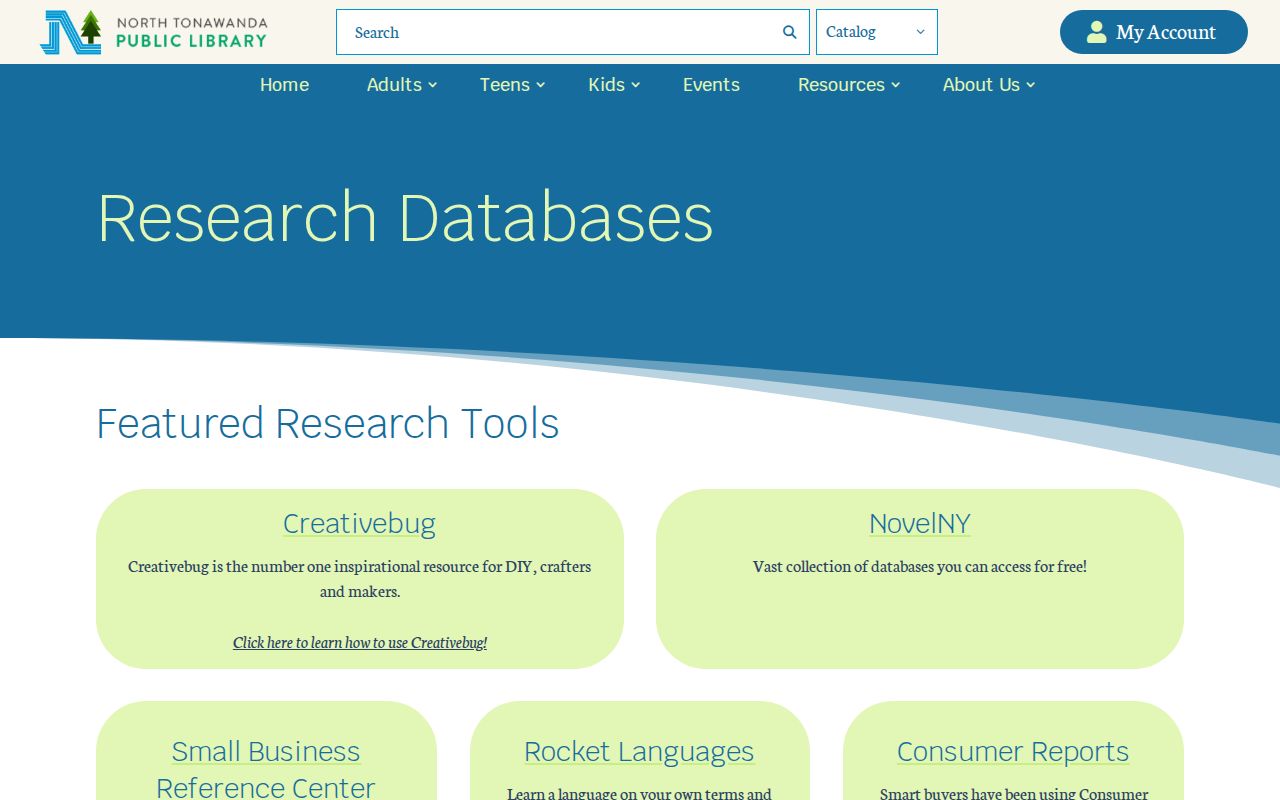
The database listing supports a research path through library resources, but it does not turn a directory listing into proof of a person’s identity or present address.
The 1893 North Tonawanda Directory Item
The Historical Society of the Tonawandas item page identifies an item titled “North Tonawanda City Directory (1893), excerpts.jpg” and dates it to 1893. That metadata makes the item a useful starting point for an archival North Tonawanda name-and-address search. It does not expose page-level text or OCR in the inspected page. Any exact name, address, or notation must come from reading the image itself and recording the item, page or folio, and visible column heading.
The Historical Society’s 1893 directory item provides the cited metadata and image viewer for the historical excerpt.
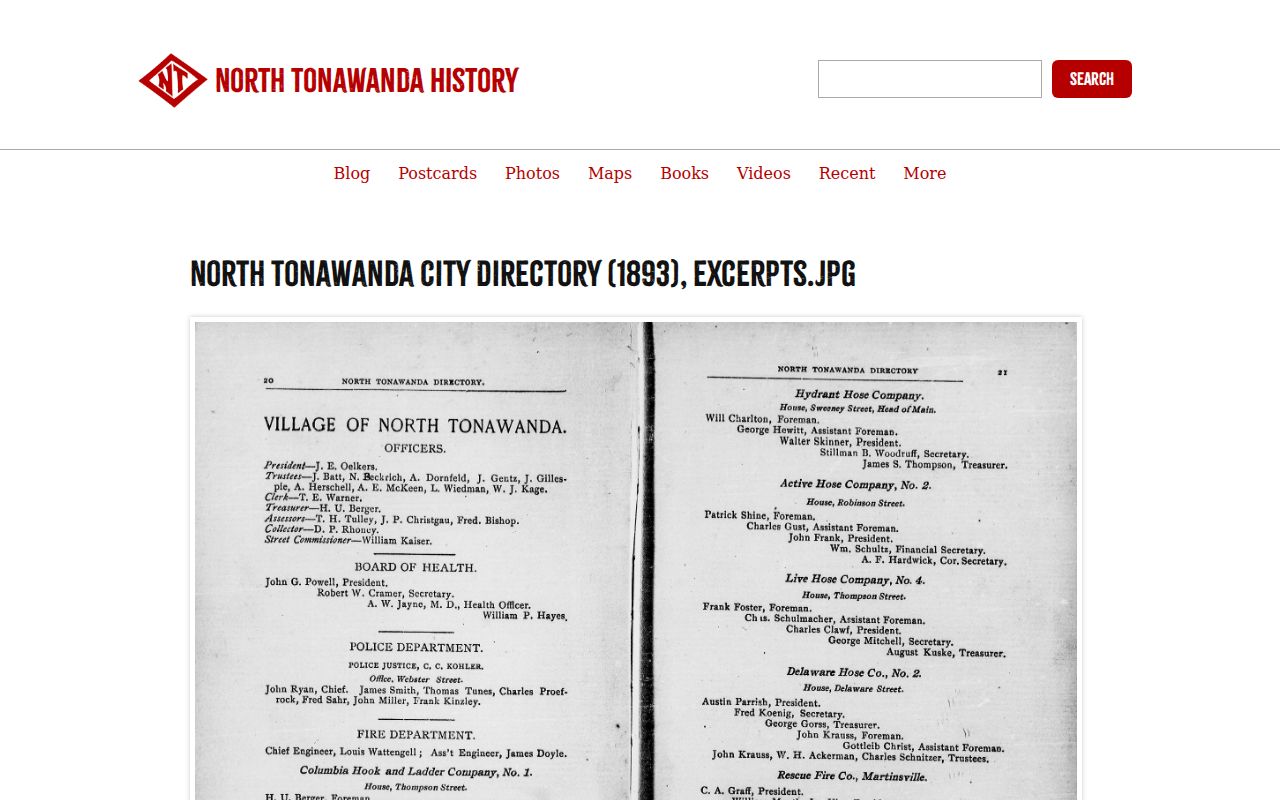
The image confirms that an item is available to inspect. It does not establish a complete directory run, expose OCR, or support an invented sample entry.
Reading a North Tonawanda City Directory
The 1988 ERIC preservation report describes the Tonawandas directory collection as carrying names, spouses, occupations, addresses, telephone numbers, businesses, and city officials. Not every field appears in every volume or entry. Read the printed heading and notation key first. A business address and a household listing have different meanings, and a subscriber or head-of-household entry does not account for every person at an address.
| Name | Transcribe the name, initials, and spelling exactly as printed. |
|---|---|
| Relational notation | A spouse or other relationship may appear when the volume prints one. |
| Occupation or business | Keep the historical label as a clue for distinguishing same-name entries. |
| Street address | Record the number and street exactly, then test it against maps and later records. |
| Telephone, official, or organization role | Later books may print a phone number, business, city-official, or organization context. |
When an abbreviation is uncertain, copy it rather than expanding it. A later census, obituary, deed, or newspaper notice can confirm whether two similar entries concern the same person.
North Tonawanda City Directory Terms
Later directories sometimes include an address-oriented section, but no separately cataloged complete reverse or criss-cross run was confirmed in the inspected local sources. Ask the library or Historical Society whether a selected volume or fiche reel has a street-order section before relying on it. The definitions that follow describe how such sections are commonly read, while the specific volume remains the authority.
- Criss-cross directory
- An address-order section that can list entries street by street when a volume includes one. Confirm that the selected North Tonawanda volume has this section.
- Householder index
- An alphabetical finding aid centered on household heads or listed subscribers. It may omit boarders, children, and other people.
- Abbreviation key
- The volume’s printed guide to short forms. Photograph or transcribe it before expanding a notation in research notes.
Note: Treat a missing name as an unlisted or unlocated entry, not proof that the person was absent from North Tonawanda.
North Tonawanda City Directory Timeline
The known sequence is uneven, but it is still useful for planning a search. The state catalog, local image item, and preservation report point to several dated checkpoints. They show preservation and access history, not a promise that all volumes can be viewed remotely.
- 1892: the first listed year in the State Library Tonawanda/North Tonawanda holdings.
- 1893: the Historical Society metadata identifies a North Tonawanda directory excerpt.
- 1894-1986: the State Library catalog lists selected runs and gaps through 1985-86.
- 1988: an ERIC report documents a microfilm project and describes a Tonawandas directory run as complete for 1892-1986.
When a year is absent online, ask whether the library or Historical Society retains a filmed reel, reader copy, paper volume, or related finding aid. The report is a preservation lead, not a substitute for the original directory page.
Trace North Tonawanda City Directory Households
Directories bridge the long gaps between censuses. Use them to build a dated sequence rather than a single claim of residence. New York State Library guidance lists state census years including 1892, 1905, 1915, and 1925, though Niagara County and municipal availability must be checked in the actual volume. Pairing a directory year with the nearest available state or federal census can expose spelling changes, moves, widow notations, or a business address that needs more work.
- Start with the surname and first initial in the earliest likely directory, and record the year, page, and exact text.
- Check the nearest earlier and later cataloged years for initials, street changes, and variant spellings.
- Search the street section only when the inspected volume actually provides one, then compare nearby listed addresses.
- Pair the dated entry with the closest available census and preserve what each source calls the person.
- Test a disappearance with a newspaper notice, cemetery directory, obituary, deed, probate clue, or County Historian material.
A person can vanish from a directory because of a move, death, missed listing, changed name, or changed publication practice. The North Tonawanda resident lookup offers a separate route for checking a modern official record relationship without recasting a historical listing as current proof.
North Tonawanda City Directory Cross-Checks
Newspapers and the County Historian help test what a directory snapshot suggests. The State Library’s newspaper holdings list Evening News on microfilm for 1893-1938, Evening News of the Tonawandas for 1938-1954, and Tonawanda News from 1954 onward in the cataloged ranges. The Niagara County Historian lists obituaries from the 1840s, marriage records from 1908, state and federal census material from 1850, naturalizations from 1836, church records, city directories from 1856, maps, diaries, and family material.
Compare a dated directory entry with the full newspaper item and its dateline. An obituary, notice, or advertisement can supply a former address or family relationship, but it can also use the regional Tonawandas label. Keep the original source role clear: directory-listed, newspaper-mentioned, deed party, cemetery record, or organization role.
North Tonawanda Directory Geography
North Tonawanda’s waterway and industrial history can guide a family search without assigning identity by neighborhood. City history describes the place as the Lumber City, and the 2025 comprehensive plan supplies context for downtown, Wurlitzer Park, Martinsville, waterfront, wetlands, transportation corridors, and industrial land. Those place names help choose a historical map, newspaper title, or preservation source. They are not a way to decide who lived on a street.
For a family tracing a relative from an obituary to an old address, the practical sequence is directory entry, historical map, dated newspaper or census check, then parcel or deed evidence if a location transition is needed. Save the item ID, year, repository, image or page, and the uncertainty that remains. That record trail preserves the useful human connection while keeping the claim no broader than the sources allow.