
North Tonawanda Previous Residents by Era
A backward North Tonawanda address trail starts with the source that fits the era, not a broad name search. The table splits four kinds of sources. It shows the present parcel view, recorded transfers, historic directory listings, and archival materials. Each row is a map to a record. No row names every resident.
| Source | Years It Covers | Where Held | What It Shows |
|---|---|---|---|
| ProsGAR parcel pages | Current page and displayed sale history; historic online start not located | Niagara County Real Property | Parcel location, SBL/SWIS, owner or mailing role, assessments, sale clues |
| SearchIQS deed index | Deeds circa 1918; ranges vary by series | Niagara County Clerk and portal | Recorded parties, instruments, legal descriptions, book and page |
| State Library directory run | 1892 to 1986 with cataloged gaps | New York State Library fiche holdings | Dated name, address, business, and directory context |
| Historical Society item | 1893 excerpt | Historical Society of the Tonawandas | Image metadata and a directory-page lead requiring image review |
| County Historian material | Obituaries from the 1840s; census material from 1850 | Niagara County Historian | Obituary, census, church, map, directory, and family-history leads |
| City tax and permit requests | Year-specific requests; online historic start not located | North Tonawanda offices | Tax certificate, summary, or existing public address record |
Begin with the parcel when the address is known. Older dates call for a directory or historian source. Each North Tonawanda source covers its own date range and plays its own role. A dated directory listing and an earlier recorded party should stay separate entries in a past-residents file. Dates keep the trail honest. Note the record date, the municipal boundary, and the role shown beside every North Tonawanda previous-residents detail.
North Tonawanda Parcel Clues First
Niagara County ProsGAR is a stable first stop. It can show a street address, SBL, SWIS, owner and mailing address, property class, assessment data, and sale history. Searches run by street address, Tax Map number or SBL, owner name, Street Finder, or municipality. Address search works on contained text. Check North Tonawanda in the result itself. A street name alone never guarantees the right municipality.
Save the current parcel identifiers before reading any deeds. The SBL and SWIS survive an older spelling, a changed house number, or a lot division better than a street line does. An assessment owner is an administrative role. So is a tax mailing recipient. Either label may point to the next record to seek, but neither one establishes who actually lived there before.
The county Real Property office offers another access path when a needed assessment year is missing online. Its page links rolls, tax maps, parcel information, transactions, and digital maps. Don't backfill a missing year from the parcel page.
Note: A current North Tonawanda parcel page cannot supply a historical assessment year that was never published online.
Walk North Tonawanda Deeds Backward
The Niagara County deed chain anchors an address history. Start from the parcel result. Then step from the most recent recorded transfer to the one before it, one document at a time. Read the legal description too. That description guards against false matches when the same address, surname, or loose "Tonawanda" label shows up in more than one place.
- Locate the North Tonawanda parcel in ProsGAR and save its SBL, SWIS, current or prior owner clue, and any displayed deed book and page.
- Search the County Clerk index or SearchIQS for the most recent instrument, then record the grantor, grantee, instrument date, consideration, legal description, book, and page.
- Use the earlier party and legal description to find the preceding transfer. Compare parcel and map details before treating it as the same property.
- Repeat the process backward until the portal coverage ends or the legal description changes. Mark the point where the online chain becomes incomplete.
- Use County Clerk public-computer access, a copy request, subdivision maps, or the Clerk office for older or missing documents, then test dated directory and newspaper clues around each transfer.
- Grantor
- The party transferring an interest in a recorded instrument.
- Grantee
- The party receiving that recorded interest.
- Chain of title
- The ordered sequence of recorded transfers associated with the same parcel or legal description.
- Legal description
- The lot, tract, metes-and-bounds, or map-based property description in a record. It is often more durable than an old street number.
A deed chain identifies documented property parties. It does not, by itself, identify a historical household, so keep owner, grantor, grantee, estate, fiduciary, mailing recipient, and directory-listed person in separate fields.
North Tonawanda Deed Index Routes
The Niagara County Clerk's recording instructions lay out what must accompany a deed, including the named parties and a legal description. They also document e-recording, carrier delivery, appointment-based in-person recording, and copy requests by phone, email, or mail. The Clerk's general page comes next. Use it for maps and document-copy procedures. It is the right route when the address history needs an official record.
SearchIQS is a county-linked index and image service. Its help page describes deeds from about 1918 and different ranges for other instruments. Treat that page as descriptive, not a completeness promise. The full index fields sit behind a login. A paid account can help with a tightly scoped search. For a needed document or a gap, a direct Clerk request is the better fallback.
The Niagara County SearchIQS portal is the online gateway for this leg of the trail. Save the portal result with its source date. Then verify the point. Read the document itself, or ask the County Clerk, rather than trusting one index line.
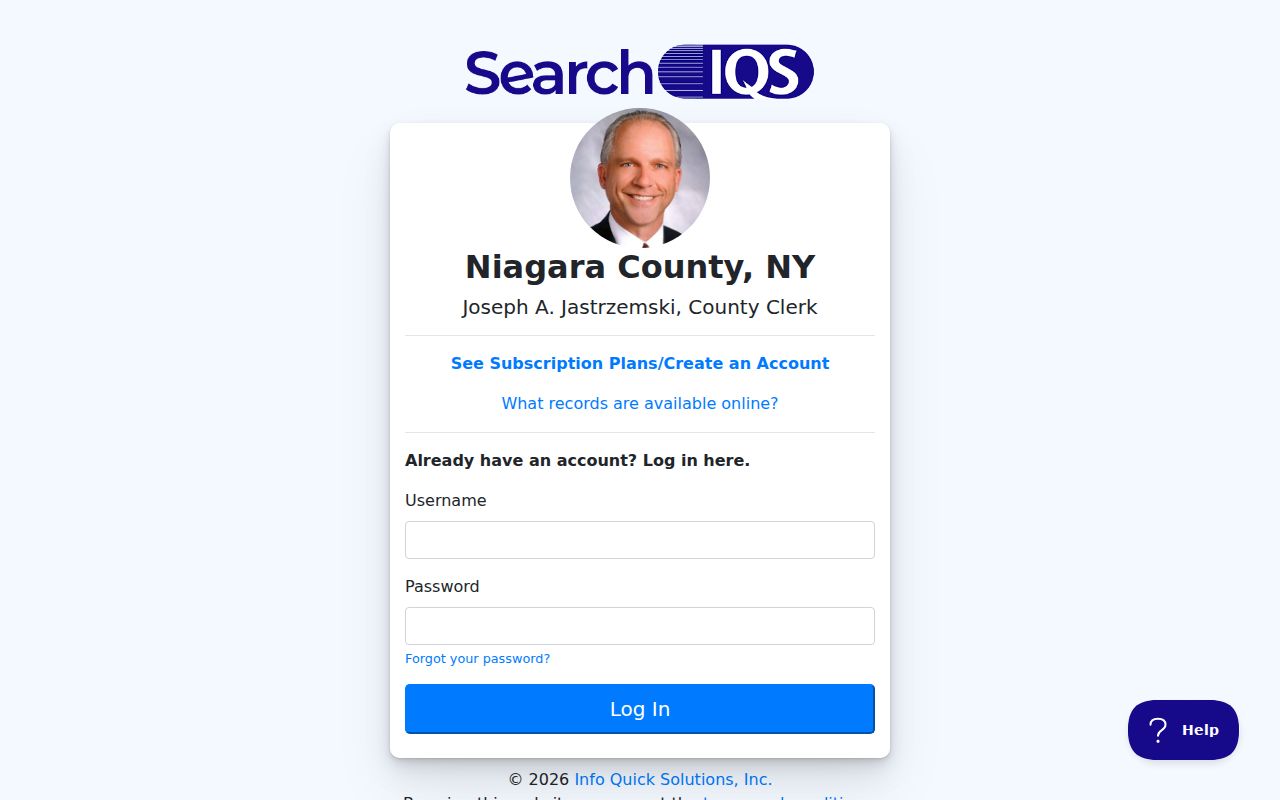
The portal's subscription screen is a useful reminder. The online index is one access channel, not the whole North Tonawanda deed record.
North Tonawanda Transfer Records
A recorded instrument says more than a price. County instructions call for named parties. A legal description and transfer material belong in the record too. A nominal amount, an estate name, or a non-arm's-length marker can make a price comparison mislead. Take the 273 Goundry Street record. Its 2025 transfer shows $1, marked not usable and not arm's length, with an estate as prior owner. That pattern points to probate, not the market.
The County Clerk recording page displays the deed and transfer-material context behind a North Tonawanda property document. Record the instrument type and its date. Use a probate index or an obituary only as a separately dated supporting lead.
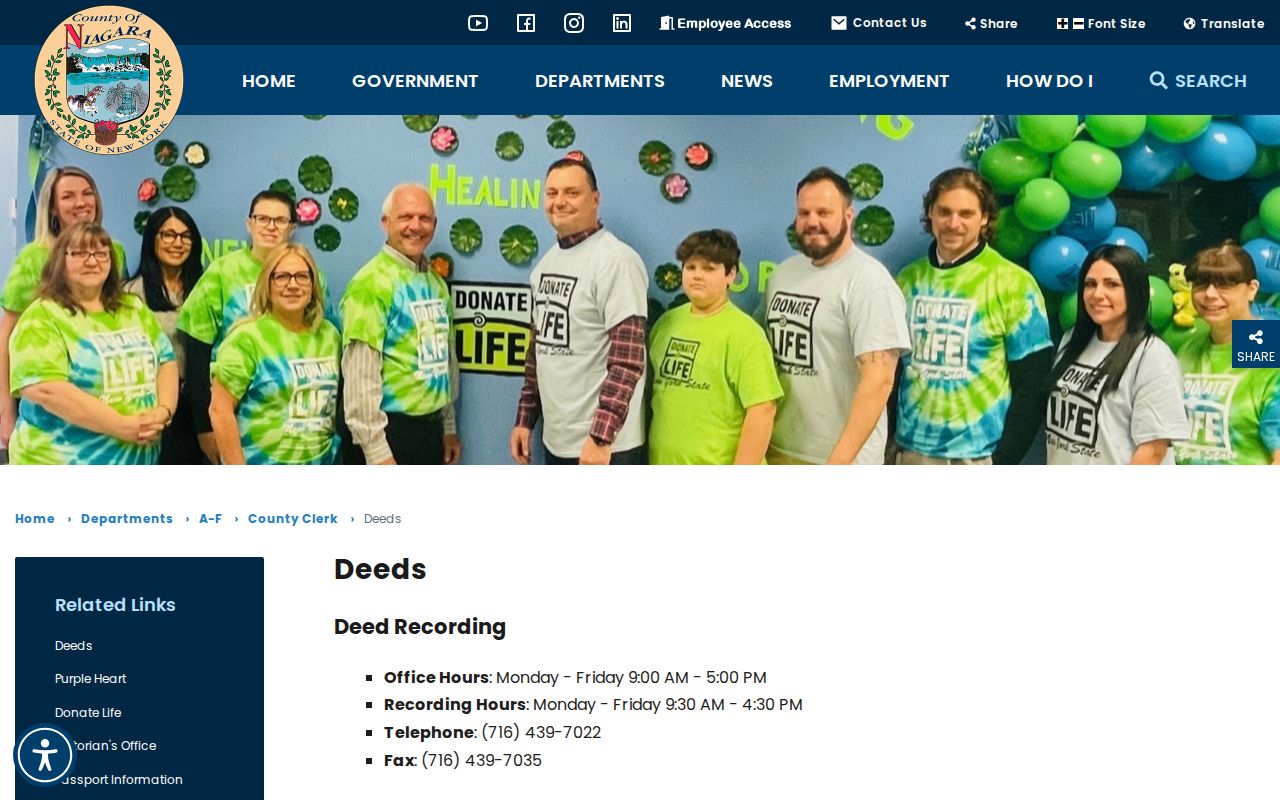
Read the document trail in order. That habit keeps a transfer amount or a mailing line from turning into a claim about prior residence.
North Tonawanda Address Changes
An old address deserves two columns in your notes. Record the address exactly as printed. Add a normalized form for searching. Try abbreviations, directional prefixes, and hyphenation variants. Historic entries also swing between North Tonawanda and plain Tonawanda. Never quietly rewrite what the directory printed. Geography matters here too. The City and Town of Tonawanda sit in Erie County, while North Tonawanda belongs to Niagara County. Confirm both the county and the municipality before tying a directory line or newspaper item to a parcel.
When a street number changed or a lot was split, maps, subdivision plans, and legal descriptions form the safest bridge. The County Clerk's subdivision-map route runs through INDEXBOOKS, map volume, a subdivision or surveyor search. Then comes a document lookup by map book and page. North Tonawanda library maps and modern GIS add geographic context. They still will not name an occupant.
Note: Keep the map date, SBL, legal description, and original street wording together. Do this whenever a North Tonawanda address seems to shift across records.
Pair North Tonawanda Directory Years
Deeds show who owned a parcel, but they say little about who actually lived there. That is where a city directory earns its keep. The New York State Library catalogs Tonawanda and North Tonawanda volumes reaching back to 1892, and the runs continue through 1942, with later holdings from 1946 through 1986. Coverage is uneven, with real gaps between volumes.
One caution applies. The catalog files everything under the single heading "Tonawanda." Before you credit an entry to North Tonawanda, open the volume itself and confirm the location it covers.
- Choose the directory year closest before and after a deed or tax date for the North Tonawanda address.
- Transcribe the printed name, initials, street notation, abbreviations, and any household, business, boarder, or organization label exactly.
- Check the next available directory year and the relevant state or federal census schedule, noting that county availability varies by volume.
- Compare the address with maps, newspaper notices, obituaries, and the deed chain. A second independent clue is especially important for a common name.
- Describe the result as “directory-listed at” or another source role unless separate evidence supports a stronger conclusion.
The North Tonawanda Directory Book walks through the broader historical collection volume by volume. A lookup for past residents works differently. It needs a dated comparison centered on one address, not a retelling of the whole shelf.
North Tonawanda’s 1893 Directory Image
The Historical Society of the Tonawandas holds a digital item. It is cataloged as "North Tonawanda City Directory (1893), excerpts.jpg." The metadata states the title plainly. It also gives the 1893 date. The page-level OCR does not surface the text of any individual entry. That makes the image a promising lead for previous residents. It is not proof of a named listing. The page itself must be read and transcribed first.
The Historical Society 1893 directory item preserves the image and its metadata. It serves as a North Tonawanda address lead. Record the item identifier, the page details, and any visible column headings. Then compare what the page shows against the state library catalog and at least one separate source. Only then treat it as a residents directory entry.
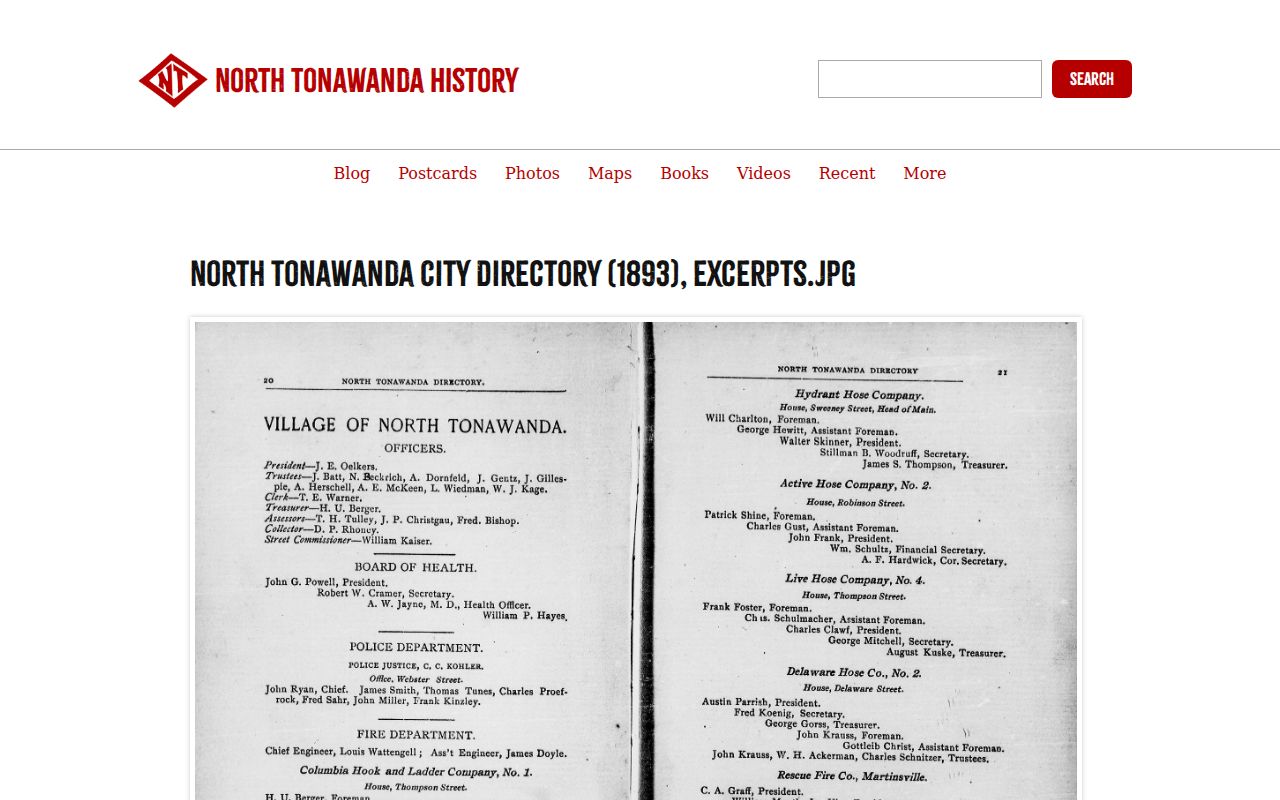
The scanned page has to be read directly. Excerpted images and incomplete OCR cannot stand in for an exact North Tonawanda directory entry, and a transcription of the actual page text is the only way to confirm a name beside an address.
Note: Treat the 1893 North Tonawanda image as an archival lead until its page text is read directly.
North Tonawanda Past Household Checks
When an address trail goes cold, obituaries and probate files can pick it up again. The Niagara County Historian holds obituaries reaching back to the 1840s, plus marriage records from 1908, naturalization records from 1836, census material from 1850, church records, maps, and family papers. The North Tonawanda Public Library Local History collection adds clippings, photographs, Erie Canal material, cemetery directories, and memoirs. Much of it is reference-only, so plan to visit.
Probate searching runs through WebSurrogate, which supports name, file, old-index, index-book, and will searches. Online images are limited to documents filed on or after 2014-02-19, and earlier unrestricted material must be viewed at courthouse public computers. An obituary or probate hit can tie a relative or an estate to a date. Treat it as a lead, not proof. Corroborate the source role before adding any name to an address history.
Lawful use. North Tonawanda house-history research is for personal, lawful historical and family research. Do not use a past address trail to track, contact, threaten, or harm a living person, and preserve any protective omission.
Present the finished work as dated roles. Each entry names the person as parcel owner, recorded grantor or grantee, tax-mail recipient, directory-listed resident, obituary subject, or probate party. That wording keeps the record honest and makes the previous-residents trail useful to whoever picks it up next.